Residential Spray Foam Insulation for Albuquerque Homes
Attic, wall, crawl space, and garage insulation for Albuquerque houses, from mid-century ranches and older valley homes to new builds in Rio Rancho. Open-cell or closed-cell, matched to how the house is put together.
Hot attics, freezing nights, and swamp coolers: insulating Albuquerque homes
Albuquerque’s high desert works a house from both ends. Summer sun heats the attic all afternoon, winter nights drop below freezing, and the gap between day and night stays wide all year. In plenty of stucco houses, old and new, the attic has a thin layer of blown insulation, ductwork running through it, and a ceiling underneath full of holes: can lights, bath fans, the hatch, the tops of interior walls, and often the evaporative cooler duct. Heat comes down through those openings in July, and warm air rises out through them in January. Flat-roofed pueblo-style homes are different: there is little or no attic to work in.
Foam deals with the heat and the leaks together: it fills the space and stops the air moving through it. When the ducts or furnace sit in the attic, open-cell under the roof deck usually makes the most sense, because it puts the ducts inside the insulated shell of the house. In an empty, vented attic, foam on the attic floor can work instead. Closed-cell goes where depth is tight or moisture is a concern: rim joists, crawl spaces, and the shallow ceiling of a flat-roofed house once a remodel opens it up. New homes, casitas, and additions are easiest before drywall. Finished stucco walls are harder, and we’ll tell you on the visit whether there’s a practical way in.
Typical home insulation jobs in Albuquerque
Roof-deck foam for Rio Rancho and West Side homes with attic ductwork
Mid-century ranch houses with thin, settled attic insulation and a leaky ceiling
Flat-roofed pueblo-style homes, foamed from below when a remodel opens the ceiling
Casitas, additions, and garage conversions, sprayed before the drywall goes up
Homes in Sandia Heights and Tijeras where the heating season runs long
What we plan around in Albuquerque
Strong high-desert sun heating shallow attics and the ducts inside them
Freezing winter nights that pull warm air out through ceiling gaps
Swamp coolers that need an exit for their air once the attic is sealed
Finished stucco walls, which make existing wall cavities hard to reach
How it works
Step 1
Walk the house
We look at the attic, walls, and crawl space and recommend open-cell or closed-cell foam for each.
Step 2
Prep
Floors, windows, and anything nearby get covered, and the work area is ventilated.
Step 3
Spray
Foam goes on to the thickness in the estimate, sealing gaps as it expands.
Step 4
Check and clean up
We check coverage, clean up, and tell you when the space is ready to use again.
Also serving: Rio Rancho, Los Ranchos de Albuquerque, North Valley, South Valley, Paradise Hills, Sandia Heights, Carnuel, Tijeras.
Our work
Residential Spray Foam: examples of our work
See our work in other communities we serve. Each gallery names the town.
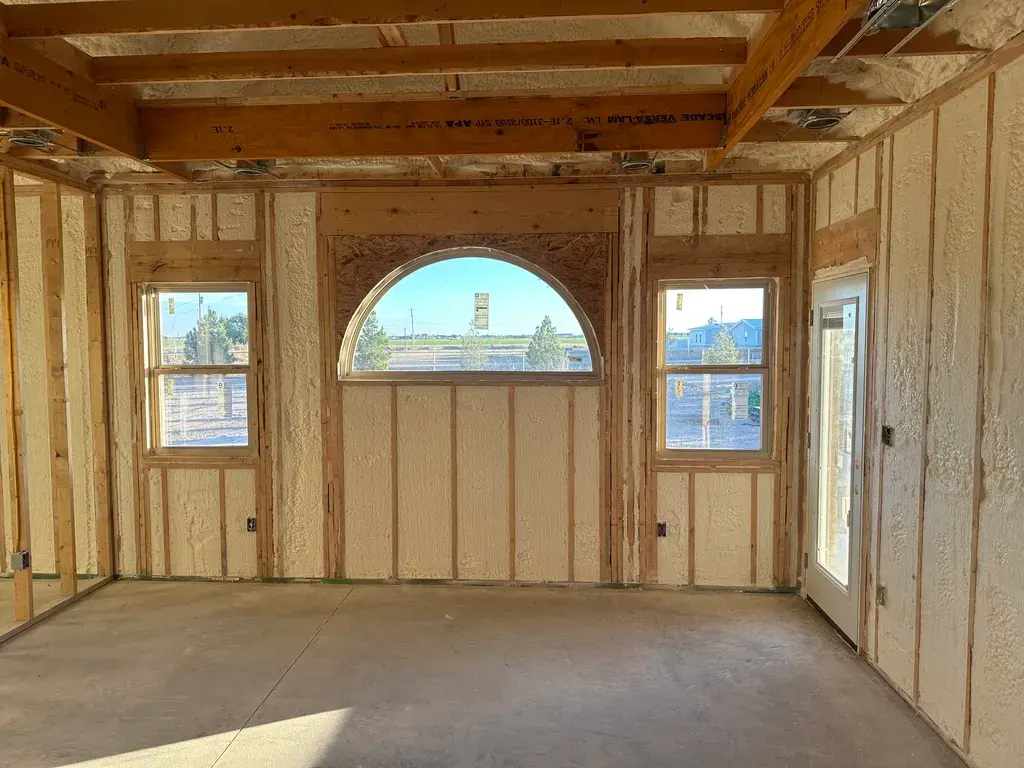
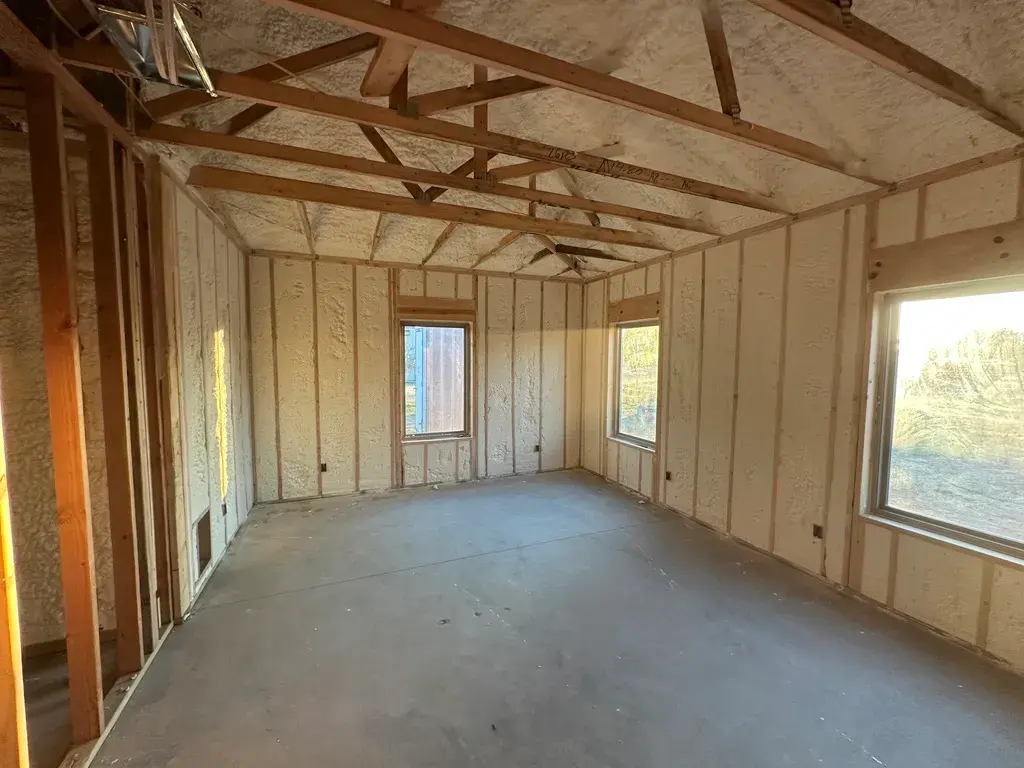
A new Carlsbad home with spray foam in the exterior walls and on the underside of the roof deck, so the attic and the ducts running through it are sealed in.
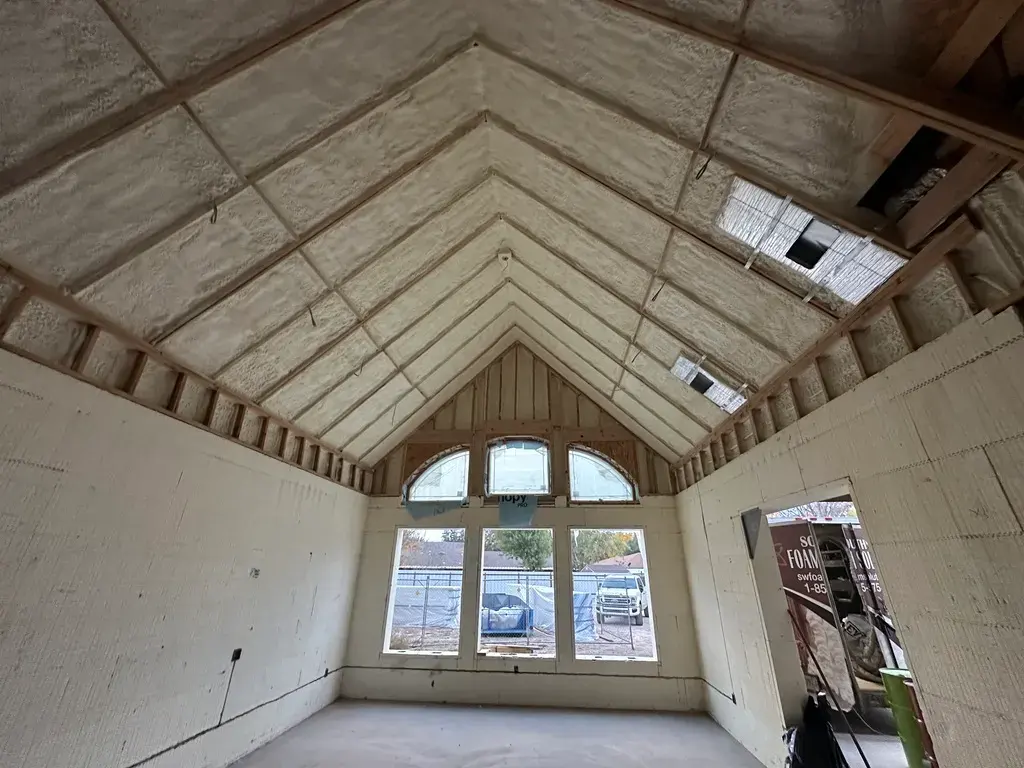
A new Artesia home with arched windows and vaulted rooms: foam in the exterior walls and on the roof deck brings the attic and ducts into the insulated space.
Residential Spray Foam in Albuquerque: common questions
Yes, with some planning. An evaporative cooler pushes outside air through the house, and that air has to leave somewhere, usually through a cracked window or ceiling relief vents. If your relief vents empty into the attic, they need another way out before the attic is sealed under the roof deck, so we look at that first. In winter the cooler duct is a big opening to the outside, and it’s worth closing off for the season whether you foam or not.
Sometimes, but it’s harder than open framing. Spray foam goes into open stud bays, so in a finished house the wall has to be opened up, and that usually only pays off when you’re already remodeling a room. In many Albuquerque homes the bigger leaks are overhead anyway, at the ceiling and the tops of the walls, so the attic is often the better place to start. When we come out, we check how the walls could be reached and give you a straight answer.
The foam is the same; the priorities shift. Up in Tijeras Canyon and the Sandia foothills, winters are colder and snowier than in most of the city, so heat loss through the ceiling and floor matters more than summer attic heat. Down in town, both seasons count. We insulate homes in Tijeras, Carnuel, Sandia Heights, Los Ranchos de Albuquerque, the North Valley, the South Valley, Paradise Hills, Rio Rancho, and Albuquerque itself.
Need home insulation in Albuquerque?
Tell us how the house is cooled, swamp cooler or refrigerated air, and what you want insulated, and we’ll set up a site visit.

 Carlsbad, NM