
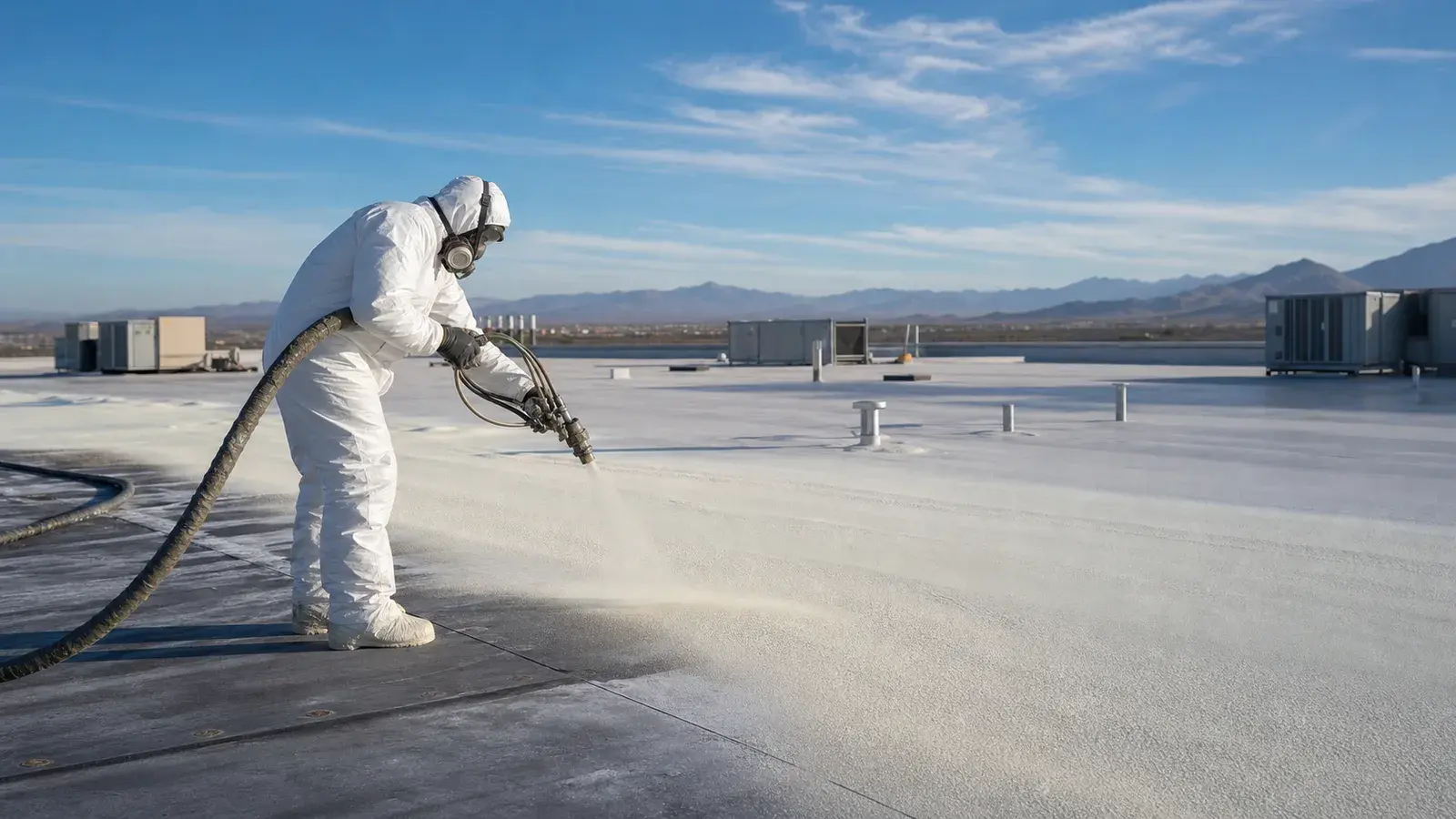
Spray foam roofing
Spray Foam Roofing in New Mexico & El Paso
Seamless, coated foam roofs for flat and low-slope commercial and residential buildings across New Mexico and El Paso.
A seamless roof over the one you have
Spray polyurethane foam (SPF) roofing goes on as one seamless layer over an existing flat or low-slope roof and is finished with a protective coating. It is a well-established option in the Southwest for commercial buildings and flat-roofed homes, it insulates the roof at the same time, and it often avoids tearing off the old roof.
Not every roof is a candidate. We inspect the existing roof, deck, and drainage first and look for trapped moisture or damage that has to be fixed before foam goes on. The estimate spells out what we found, what prep is needed, the foam thickness, and which coating system we would use.
What we check on the roof
- What’s on the roof now: membrane, deck, old coatings, and past repairs
- Wet insulation, trapped moisture, ponding water, and drainage that needs fixing first
- Whether the roof can take the system as-is or needs a tear-off or a different approach
- How much insulation the foam adds and what the product data says the assembly will do
- Penetrations, curbs, edges, drains, and transitions, where roofs usually leak
- The right coating for the sun exposure, foot traffic, and maintenance you expect
- Fire, code, manufacturer, and warranty requirements for the whole system
Commercial roofing
Warehouses, shops, retail, and office buildings with flat or low-slope roofs. We plan around rooftop equipment, drainage, access, and your operating hours.
Residential roofing
Flat-roofed and low-slope homes, common across New Mexico and El Paso. We check the deck, moisture, drainage, and penetrations before recommending foam.
How a foam roof goes on
Foam roofing adds insulation and creates a surface that receives a protective coating. A restoration coating on a metal roof is a different scope: panel repairs, fasteners, seams and a compatible coating system. Tell us what is on the roof now so we can discuss the right service rather than assume every leaking roof needs foam.
- Comprehensive Inspection: We walk the roof, check for moisture and damage, and list anything that has to be fixed before foam goes on.
- Surface Preparation: Repairs, cleaning, and prep so the foam bonds to a sound, dry surface.
- Foam Application: Our crew sprays the foam to the specified thickness, sloping it to move water toward the drains.
- Protective Coating: A protective elastomeric coating goes over the foam to shield it from UV and weather.
- Granule Application: Granules are broadcast into the top coat when the system calls for them, for traction and extra wear.
- Final Inspection: We check thickness, coating coverage, and every detail against the estimate, and review our inspection findings with you.
Looking after a foam roof
Follow the selected system’s inspection and maintenance instructions. Have a properly equipped roofing crew check drains, penetrations, punctures and coating wear, including after damaging storms. Recoating depends on the roof’s condition and compatibility; it is not a substitute for removing wet or damaged materials.
Before any recoat we inspect the roof, deal with damaged or wet spots, and confirm the new coating is compatible with what’s there.
Roofs that are usually good candidates
For an estimate, share the building address, known roof type, leak locations and the dates or weather when leaks appeared. Interior stain photos and views taken safely from the ground help. Leave rooftop photos, testing and access to the roofing crew; we review the inspection findings with you.
- Commercial and industrial flat or low-slope roofs
- Warehouses, equipment storage, and agricultural buildings
- Residential flat or low-slope roofs
- Metal roofs that leak at the screws and seams are usually better served by a silicone metal roof restoration, which seals and coats the metal instead of foaming over it
- Existing roofs that pass our moisture, drainage, and structural check
Schedule a Visit
Tell us about the roof and we’ll come look at it. Estimates are free and there’s no obligation.
Schedule a VisitWhere we work
We do spray foam roofing across New Mexico, El Paso, and parts of West Texas. Most of that work is in and around:
All service areasRead the guide
How the work happens, explained the way we would in your driveway.
Spray Foam Roofing FAQs
Wondering if your roof is a candidate?
We’ll inspect the roof, deck, and drainage and tell you straight whether foam roofing makes sense. Estimates are free.