
Foundation repair
Foundation Repair in New Mexico
Settled slabs, hollow spots, weak soil, and sinking footings. We lift and support foundations with polyurethane injection, and install piers when a footing needs to reach firmer ground.
Four ways we fix a settling foundation
Most foundation trouble comes down to the ground under it: soil that washed out, soil that was never compacted, or soil that can’t carry the weight. We pick the fix that matches the cause, and a lot of jobs need more than one.
Lifting settled slabs
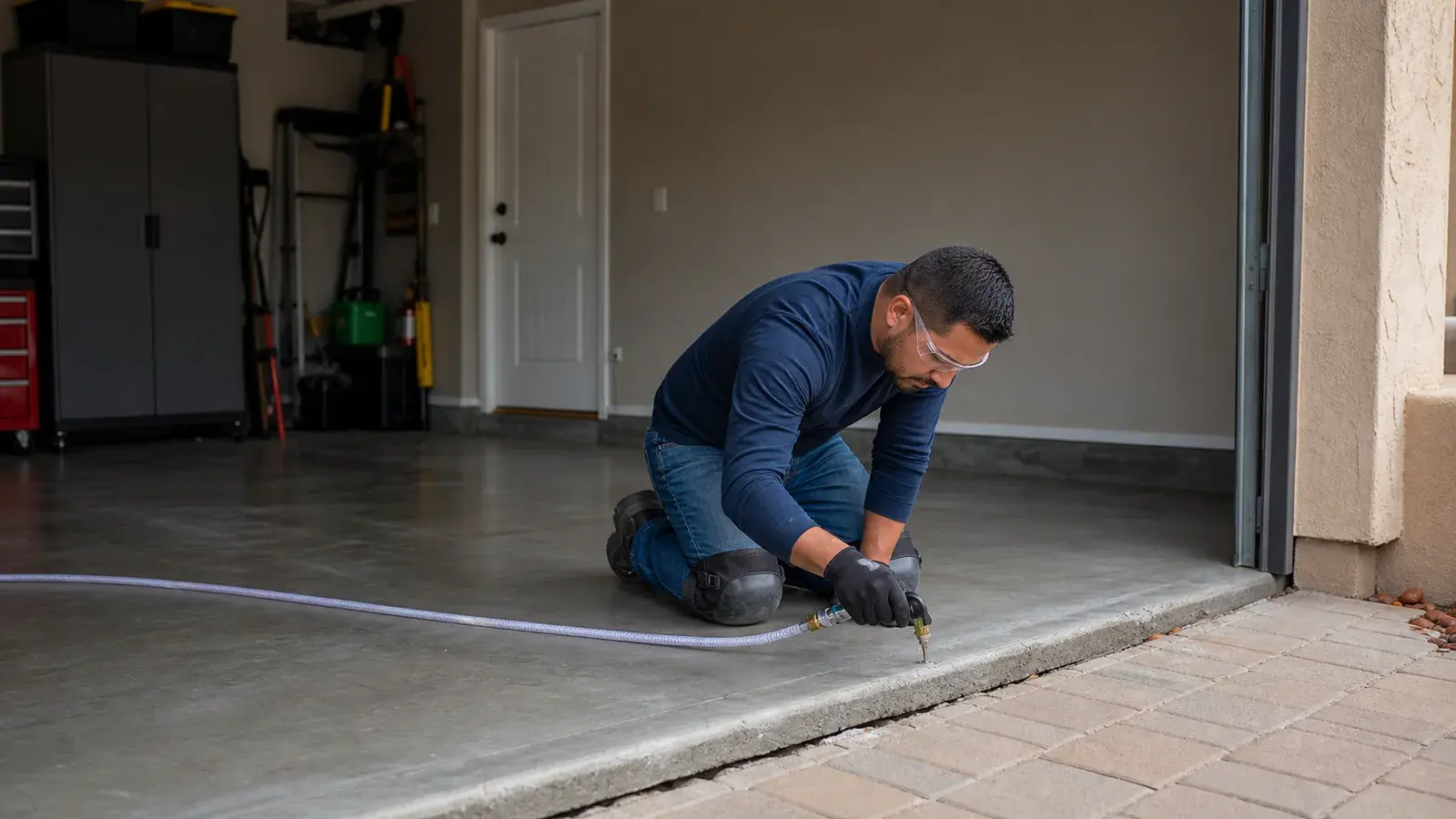
When a slab foundation, a floor, or a slab-on-grade addition has dropped, we drill small holes and inject polyurethane foam underneath. The foam expands and raises the slab back toward level without tearing anything out.
Void filling
Water and settling leave empty space under slabs and footings. We fill it with foam so the concrete is carried again, often before it has dropped far enough to need lifting.
More on void filling →Soil stabilization
Where the soil under a foundation is loose or weak, we inject foam deeper into the ground to firm it up so it can carry the load.
Piers and underpinning
When a footing keeps sinking because the soil farther down can’t hold it, piers go in under the footing to carry the load down to firmer ground.
Signs a foundation is moving
- Cracks that keep getting wider, or that are wider at one end
- Stair-step cracks in block or brick
- Doors and windows that start sticking or won’t latch
- Floors that slope, or gaps opening under baseboards and at trim
- A slab edge you can see daylight under, or soil washing out beside the foundation
What usually causes it here
- Water in the wrong place. Roof runoff and canales dumping at the wall, irrigation, and leaking lines soften and carry off soil.
- Soil that settles when it gets wet. Some New Mexico soils are dry and loose and pack down the first time they soak.
- Fill that was never compacted. Dirt under additions, patios, and utility trenches keeps settling for years.
- Soil that shrinks and swells. Clay soils in parts of the state move as they dry out and get wet again.
How a foundation job goes
- Site visit: We look at the cracks, check how far the floors are out of level, and look for where the water comes from.
- Written plan: Which method, where, and why, with anything that needs an engineer or another trade called out.
- The work: Small injection holes for lifting, void filling, and soil stabilization; excavation at the footing for piers.
- Check: We watch the structure while we lift, then re-check levels and patch the holes.
- Walk-through: We go over the result and anything around the house, like drainage, that should be fixed so it stays put.
What we’ll tell you up front
A foundation that settled over years may not come all the way back without cracking finishes. We tell you before we start what is realistic for your house.
Foam and piers put support back; they don’t stop the water that caused the problem. If a downspout, a leak, or the grading needs fixing too, it goes in the estimate or we point you to the right trade.
What to have ready
- Photos of the cracks and the areas that have dropped
- Whether the house is on a slab, a crawl space, or a basement
- When you first noticed it and whether it is getting worse
- Any water problems nearby: downspouts, leaks, irrigation, or standing water
Schedule a Visit
Send a few photos of the cracks and tell us where the property is. Free, no obligation.
Schedule a VisitWhere we work
We do foundation repair across New Mexico, El Paso, and parts of West Texas. Most of that work is in and around:
- Ruidoso
- Alamogordo
- Cloudcroft
- Las Cruces
- El Paso, TX
- Roswell
- Artesia
- Carlsbad
- Hobbs
- Lovington
- Albuquerque
- Santa Fe
Read the guide
How the work happens, explained the way we would in your driveway.
Foundation Repair FAQs
Seeing cracks or a floor that’s dropped?
Send a few photos and tell us where the property is. We’ll tell you what we think is going on and set up a site visit.