
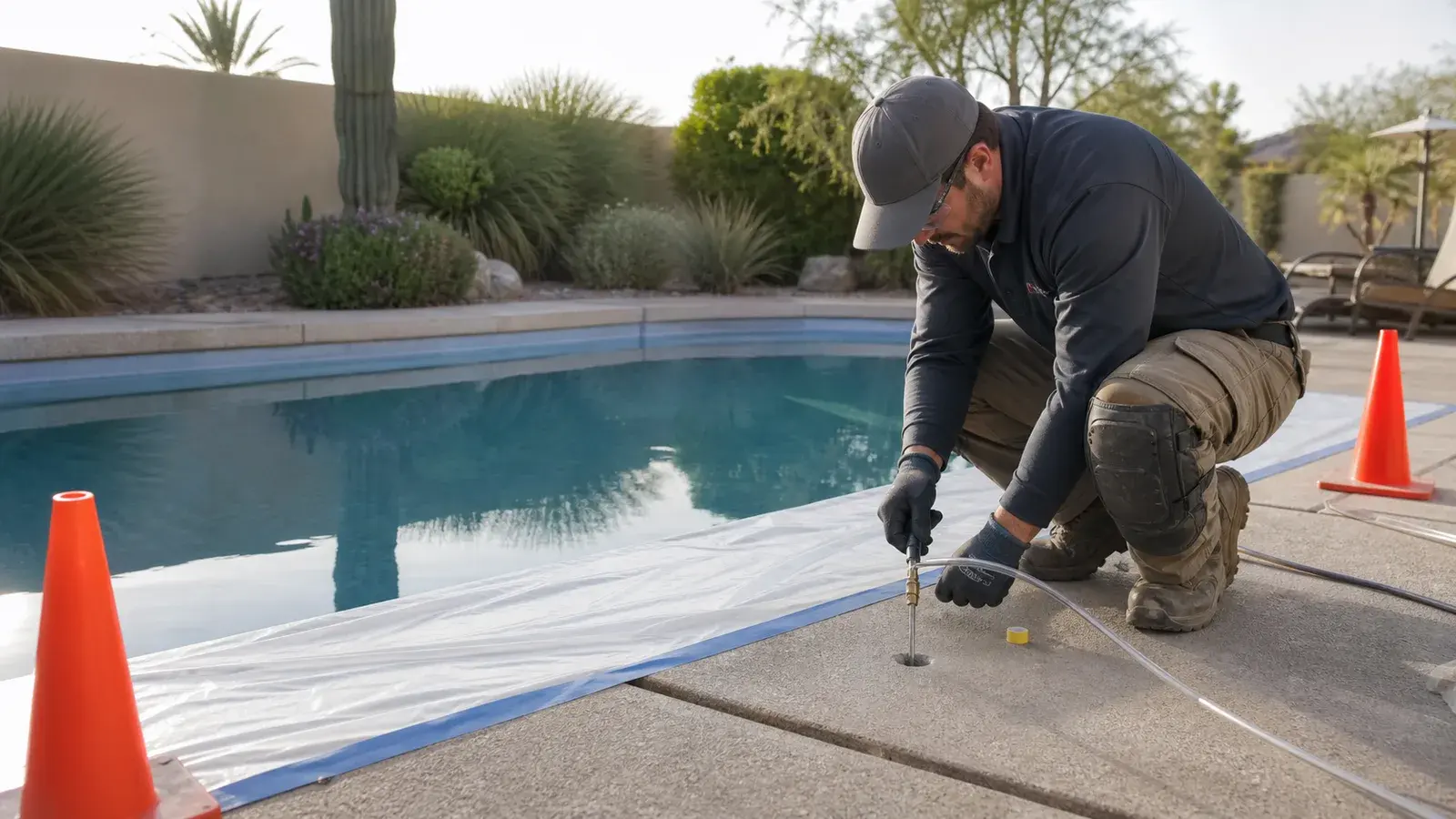
Technician drilling an injection hole in a settled pool deck, with the work area marked off by cones

Concrete pool-deck lifting

Pool Deck Lifting & Leveling

We lift sunken pool decks with controlled foam injection, working carefully around coping, plumbing, drains, and equipment lines.

What we look at first

A pool deck that has dropped away from the coping is a trip hazard on a wet surface and can pull water toward the pool shell. We map the coping, drains, and equipment lines first, then lift the deck in small, controlled stages so it comes back to level without creating a new problem.

Signs it’s time to have it looked at

  • An uneven transition between deck sections
  • A gap between the deck and coping or another fixed feature
  • Water collecting away from intended drains
  • A slab edge with visible washout or missing support
  • Cracks concentrated near a settled panel
  • Movement around equipment pads, walkways, or outdoor living areas

Why it settled

Splash-out and drainage

Water going over the edge and down the joints every day washes out the soil under the deck edges.
Backfill around the pool

The soil placed around the shell when the pool was built settles for years afterward.

Leaks

A leaking line or shell keeps the soil wet and moving. We look for the signs, and a leak needs a pool professional before we lift.

The deck and the pool move separately

The deck panels, the coping, and the pool shell are not one piece, so they settle at different rates.

What we check before we lift

  • Deck elevation relative to coping, drains, doors, and adjacent slabs
  • Known plumbing and utility routes
  • Crack patterns and the condition of decorative finishes
  • Pool equipment, railings, ladders, covers, and attached features
  • Evidence of leaks, washout, or unresolved drainage problems

Things to plan around

Coping and the shell

The deck cannot be shoved against fixed coping or the pool structure. We lift in small stages and watch those edges.

Plumbing and equipment

We locate lines and penetrations before drilling. If a leak is the cause, that gets fixed first; foam does not repair plumbing.

Drainage on a wet surface

The target height has to keep water moving to the deck drains without creating a new low spot or a lip.

Lifting is a good fit when

  • The affected panel is in one piece
  • It can move without pushing on the coping or the pool shell
  • The right height still drains to the deck drains
  • Any leak or washout has been checked out

Replacement is the better call when

  • The deck is broken up or the surface is failing
  • Moving the panel would fight the coping, plumbing, or structure
  • The pool area needs a new drainage plan or layout
  • A leak or major washout is still active

Pool Deck Lifting & Leveling FAQs

Usually not. We work from the deck side. If access or the deck-to-pool connection calls for anything different, we say so after the site visit.
No. A suspected leak needs a pool or plumbing professional first; otherwise the ground will keep moving under the new support.
Yes. Stamped, textured, and coated surfaces can be lifted; the patched holes and existing cracks stay visible up close. We talk that through before we start.
It fixes the height of the panels we lift. Drains, grading, and coping set the limits on what the water will do afterward.

Find out whether your slab is a good candidate

Schedule a site visit or send plans so we can assess the concrete and what it connects to. After the visit or plan review, we’ll explain whether lifting, replacement, or another fix makes sense and provide a free written estimate.