
The short answer: Water on bare steel can come from condensation, a leak or both. Foam can be part of the insulation and moisture-control plan, but roof repairs and removal of indoor moisture still need attention.
Why bare steel drips on cold mornings
Air carries water as invisible vapor, and warm air holds more than cool air. When air touches a cold enough surface, it drops some of that water as droplets, like a glass of iced tea in July. That cutoff temperature is the dew point, and it rises as the air gets damper.
A metal roof gets there easily. On a clear night the panels shed heat straight up to the open sky, and New Mexico has plenty of clear, dry nights. Thin steel holds almost no warmth, so it can end up colder than the outdoor air. Below the indoor dew point, water beads underneath and drips.
Where the water inside your building comes from
The steel only supplies the cold. The water comes from the air inside, and a working building puts plenty there. Desert air is dry much of the year, but a closed shop or barn can be far damper than the yard outside.
So two identical buildings on one road can behave differently. An empty storage building may barely drip, while a horse barn, or a shop that ran its swamp cooler all afternoon in spring, rains on itself by sunrise. The usual sources of that water:
- Animals breathing, plus manure and wet bedding
- Trucks and equipment parked wet
- Washdown in barns, dairies and wash bays
- Swamp coolers, which add water to the air
- Unvented propane or kerosene heaters
- A new concrete slab drying out
Why blanket insulation often fails in metal buildings
The standard factory option is vinyl-faced fiberglass draped over the purlins and pinched in place by the panels. It gets crushed thin over every purlin and girt, leaving a cold stripe at each, and over time the facing gets punctured, torn and pulled loose at its seams.
Through those openings, damp indoor air reaches the cold steel and leaves its water there. The fiberglass soaks it up, holds it against the panel, sags and barely insulates while wet. You see it as rust streaks, a bellied ceiling or a blanket full of mouse nests.
What closed-cell foam changes on the panels
Closed-cell foam goes on as a liquid, expands, bonds to the steel and cures within minutes. With no gap behind it, damp indoor air has no cold steel to reach. The room side of the foam stays close to indoor temperature, above the dew point most days, so there is far less for water to collect on.
The same pass seals the panel laps, eave gaps and fastener holes, so far less dust and wind get through. Cured closed-cell foam is dense and rigid and helps stiffen the panels it bonds to. It can also improve the wall assembly’s resistance to sideways forces, known as racking. The improvement depends on the product, thickness, and construction. It also softens the drumming of rain and hail. Ventilation still matters: foam keeps the steel warm, airflow carries the moisture out.
Getting older panels ready for foam
Foam holds only as well as the surface under it, so it has to go on clean, dry steel. The old blanket comes out first with its facing and any nests, and oil or shop grime gets cleaned off. In a sweating building, spraying waits for the morning drip to dry.
Light surface rust on sound steel is common on older buildings; loose rust and scale get cleaned off as part of prep. Rusted-through panels, or fasteners that leak in the rain, need fixing first. Foam on the underside would hide that damage, not repair it, and water would keep getting in behind it.
- Show the existing panel surface, old blanket insulation and any loose coating.
- Identify roof leaks, rust-through or damaged fasteners that need a separate repair.
- Discuss how the substrate will be cleaned, dried and prepared for the selected foam.
- Explain washdown, stored materials, heaters or other sources of indoor moisture.
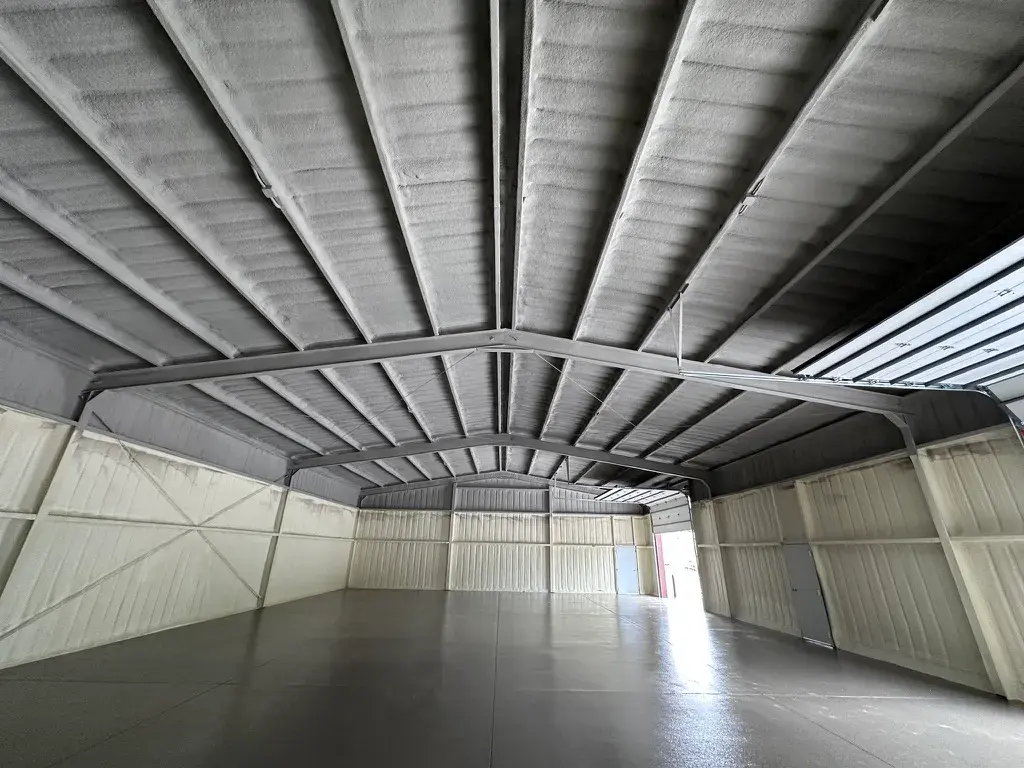
Foam on the underside of the roof panels between the steel supports in this Roswell building. Panel access and surface preparation are part of the insulation scope.
See this Roswell projectWhen the foam needs a fire-protection coating
Spray foam is a plastic, and building codes pay attention to exposed foam. Depending on what goes on inside and which code applies, it may need a coating or covering. You may hear the terms ignition barrier and thermal barrier; a building may need either or neither.
An equipment shed, a body shop and a warehouse full of workers can land in different places. Occupied commercial space tends to carry more requirements than storage. Whatever applies goes into your written estimate beside the foam type and thickness, so it is no surprise later.
New building or one you already use
A new steel building is the simple case. The panels are clean, nothing is stored inside and the shell is wide open. Foaming after it is dried in, and before liner panels, interior walls or equipment go in, keeps the job simple. If you are planning one, bring up foam early.
An existing shop or barn takes more planning. Equipment and floors get masked or moved, and spraying goes one area at a time with fresh air flowing. Animals, feed and people stay clear until each area airs out. Afterward we check coverage and thickness and walk the job with you.
Further reading
In short
- Metal sweats when thin steel cools below the dew point of the air inside, mostly on clear, cold nights.
- The water comes from inside: animals, wet trucks, washdown, swamp coolers and unvented heaters.
- Torn facing and crushed blanket let damp air reach the steel, and wet fiberglass holds it there.
- Foam bonded to the panels keeps damp air off the cold steel, but ventilation still matters.
- Old insulation and grime come off first, and fire-protection coatings depend on use and code.